This week was the most productive & interested I’ve been in language learning for a long, long time.
Gotta capture that magic in a bottle to sustain the journey consistently – the only way is, as always, to write.
what sparked this burst?
It was Youtube.
Specifically, this video titled learning a new language is easy, actually:
Aside: There’s something about this channel’s style that kicks me into action to actually start doing what I already know enough about – my current gym schedule was revived by getting jacked is easy, actually and so was writing about what I read and trying to improve my sleep schedule. So whoever you are, thanks Easy, Actually. I should probably watch the cooking one next.
Key points in the video (thanks random commentator & fellow human for the timestamps):
Step 1. Learn the basics, with a textbook (2:20)
Step 2. Listening (3:10) – immersion, no subtitles, things that interest you
Step 3. Speaking (4:53) – record yourself talking about anything and whatever
Step 4. Repeat this while increasing the difficulty of everything (5:57)
The super actionable thing I could do right away was search “easy/slow Arabic podcasts”, and to be honest that’s blasted open the door. I already like listening to podcasts while doing things, so immediately finding Learn Arabic With Khasu was an instant brain unlock.
Here’s the first video I watched, also on the topic of listening which reinforced it further:
Later in the week, I’d also
- find Ustaz Khasu’s telegram channel where he shares PDFs (and that he’s in Malaysia now at IIUM, whuut)
- another channel through my aunt’s sharing called Roots of Knowledge
- unlock a hidden memory of watching Arabic cartoons on VCDs by Ustaz Shaaban (who used to teach my parents), including ابي الحنون and Anastasia, now on Youtube/elsewhere
- this also made me open my dad’s bookshelf to find a textbook, one of which I took back home to go through consistently with H as practice
- realised that not being able to type fast in Arabic held me back.
I used to think it was cos I had no keyboard stickers, but then I realised it wasn’t the stickers, it’s that I didn’t know the layout like I did QWERTY.
So after a single search, I found two great resources on touch typing: tybaa.com (taking you step by step, found through this video) & Arabic Typing Tutor (you can put your own text, practicing writing and reading, simple and found through this Reddit post by the creator)
My first exposure to Arabic was probably when I was around 9, earlier if you count learning how to read the Qur’an. I had proper lessons in part-time madrasah, enough to help me skip a few levels when I entered IIUM where I bumped up my competency especially in reading and writing…but the gap has always been, I realise, listening & speaking.
I also started weekly Arabic classes at the start of the year with Ustaz Arif, so the intention was there. But it took me 10 months to feel the passion. That’s what they mean by there’s no such thing as an overnight success – none of the above would have made as big an impact without the years of foundation and steps taken, even if irregular.
The goal now is to keep it going. And yes I’m 33, but it really is never too late. In one of my favourite videos so far, I took something to heart: Arabic is not a foreign language, it’s my language. It’s my Prophet’s language, and the language of my Qur’an, and the language we will speak in jannah–why should I keep treating it as something foreign, when English is more foreign to me?
zaid’s history of learning languages
…he says as he writes an entire article mostly in English.
Here’s a list of languages I have had some education in:
- Bahasa Melayu – since growing up, and proudly kept through the days when we had 14 Malays in the entire year (thank you Cikgu Saripah)
- English – I can’t remember not knowing English or having to struggle. This is of course, related to my love for books and reading.
- اللغة العربية – Explained above
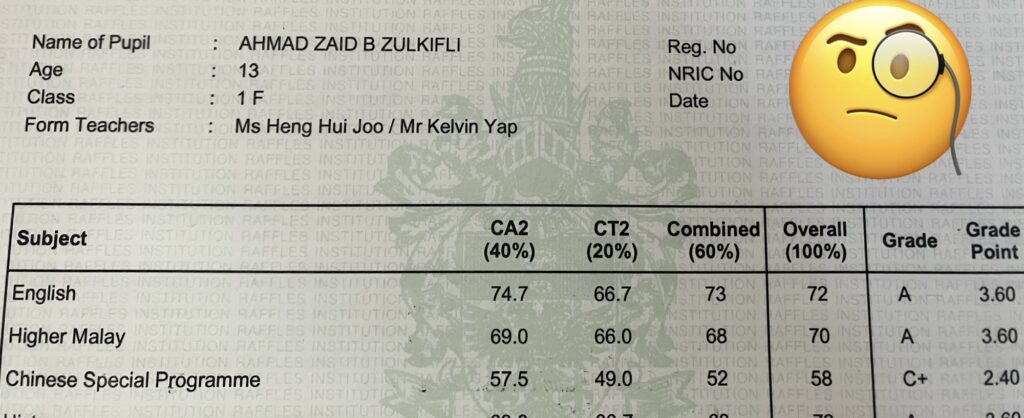
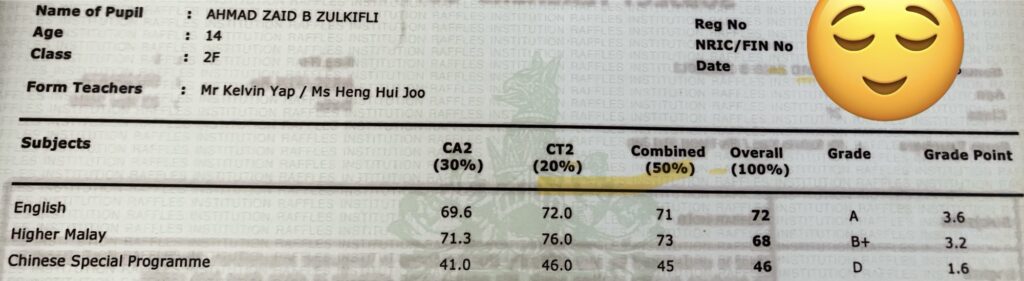
- 中文 (zhōngwén) – Started at 13 (Sec 1), actually enjoyed speaking + listening > reading/writing , kicked out unceremoniously at end of Sec 2 with my fellow Melayus for bringing down the school’s reputation with our failing grades even if we were learning and having fun (true story, education is so messed up)
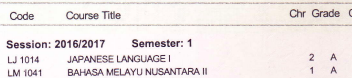
- 日本語 – Learnt it as an elective during my final semester. I enjoyed it, even the hiragana + katakana alphabet learning which I, zaido-san, got pretty good at. Thank you sensei.
Other languages
- Español – Duolingo during Covid (I think). Always said my motivation was in case I ever meet David Silva. Have yet to meet El Mago.
- Have at least started 1 Duolingo lesson in Turkish, Vietnamese, Hindi and Hebrew.
- Looked up Khmer and Cantonese words thanks to programmes in Cambodia & Hong Kong respectively.
- Does HTML/CSS/Javascript/Python count? (I say yes, but then where is the line drawn? What about the language of grantwriting, or facilitation, or the working world? I had to learn all those too…but let’s not derail this post too much.)
what’s next?
What’s next is consistency.
If you ask me what my language learning goals are, it’s 1) to understand & 2) to be understood. I find language is most fun when it’s used for the primary purpose – NOT exams, but communication between humans.
And if I had to choose between prioritising oral communication (ie. listening + speaking) or written communication (ie. reading + writing), I’d definitely choose the first. That’s how we learnt as babies: immersion, pattern recognition and repeated usage.
I heard my dad say when I borrowed his textbook that “without practice, my Arabic is back to zero”, and I am sure I’ve also previously internalised that belief. But this, alongside the belief that without being “forced” to use a language by living in a community that speaks it are two things I’m growing to unlearn, not just because it’s unhelpful but based on my actual experience, it’s also untrue and just excuses I make for myself.
Language never returns to zero. Once you’ve taken that first step, it’s there in some shape or form, hidden or apparent. To get back on the path, just get back on the path.
And as for moving to a new country? There are expats who never learn the language of the country they move to. In the end, being “forced” is a matter of intention, which means you can’t be forced. If you choose to learn a language, you will learn a language.
I’ve enjoyed my journeys. Here’s to staying on the path.
Leave a Reply