National Day has come, gone and left behind a thousand social media posts about it.
A common theme I found are variations of:
- …never take things for granted…
- Singapore might not be perfect, but nowhere is…
- I’ve traveled the world and it’s all worse out there…
- …must remember to be grateful.
when you don’t even have to pay for propaganda
You might have heard of the Internet Brigade (IB), Zionist hasbara or whatever your local version of unpaid bots/paid humans making lots and lots of posts and comments with suspiciously similar talking points.
This is probably any government’s dream then – same effect, not a single cent spent. I sometimes wonder: if the people posting these things for free realised that they are unpaid labour, when influencers are charging thousands and ministers millions to do the same thing – would they send an invoice to the ministry?
But put aside the sarcasm for a moment. This is simply proof that The Singapore Story is a well-told story, a myth told and told again across generations through different mediums. Love for your homeland is a natural feeling, and any country’s national day is a natural occasion for this love to come through.
Is this particular form of love natural though? Or is it manufactured? Curated?
Singaporean exceptionalism
If the stereotypical American’s belief in exceptionalism (America #1) is amplified during their Independence Day, then what we’re seeing is our very own version of exceptionalism. A little more insecure than our abang putih – because the Singapore Story is built on insecurity – our exceptionalism lies in reminding ourselves all the reasons why we’re the best and everyone else sucks.
We have peace (unlike everywhere else).
We have harmonious living between diverse groups (unlike everywhere else).
We have great leaders and governance (unlike everywhere else).
This is why we love rankings like Best Passport and Best Airport so much…not only because it tells us we’re the best, but also because being #1 means everyone else is worse. As our previous PM put it so well:
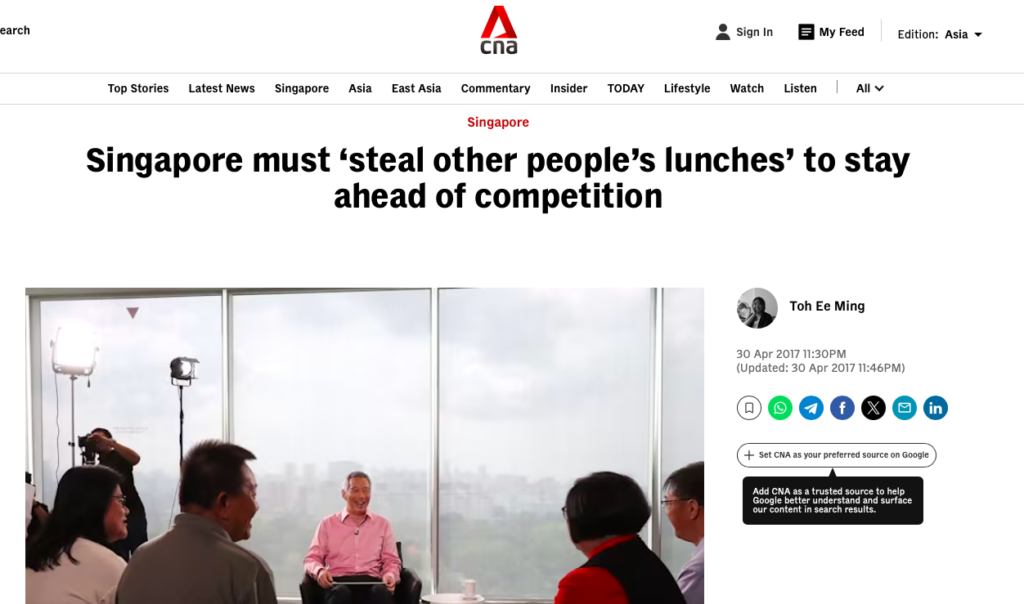
A side note: Just like the USA patriots wonder why everyone hates them, not everyone realises that this exact attitude is what puts our neighbours off about us (surprise, surprise, not race/religion). We are kiasu, we don’t just never want to lose but if there’s a win-win, we better be winning more. Sharp elbows, as KJ put it.
But of course, this is an ugly feeling. Ugly feelings don’t help inspire pride and love for who we are. Enter gratitude. It’s the humblebrag, the LinkedIn “I am so grateful…”, the showoff.
When I read these posts, I think of this legendary song from The Lonely Island:
That’s not the worst though. The worst is that “unlike everywhere else” is objectively and always untrue, unfair and a really depressing way of seeing the entire vast, wide, welcoming world. In the stereotypical Singaporean’s mind, there is no peace, harmony or good governance anywhere else in the world.
At the same time, point out any example of good (or ranking we don’t come #1 in…) and they’ll insist that we’re different. Okay, if we’re different, then why are we still comparing???
what grateful looks like
I have no doubt the unpaid propagandist truly believes that they believe in what they post. But do you?
If I could ask them one question, it’d be this: what does being grateful look like?
I am grateful. I don’t take whatever I’ve gained from being born in Singapore lightly or for granted. I think nobody should be ungrateful. These are the same things the unpaid propagandist asks us all to do. The implication of this repeated, tired call to action is that we’re not grateful enough.
If being grateful looks like overlooking our many flaws, never questioning those in power and always dissing other societies, then count me out.
How I choose to be grateful is the exact opposite. If we want to be The Best, then we’ll advise each other towards good – especially our leaders. And if we think we’re already the best, help others with no expectation of reward and humble ourselves by seeing the good that exists in others that we do not have.
What’s the point of gratitude if it leads to arrogance?
Setinggi-tinggi tupai melompat, walaupun dia bersyukur, tetap jatuh ke tanah juga. Tak perlu menyamar sebagai bintang di langit sedangkan kita hanya tupai di antara rakan-rakan tupai lain di dunia ini.
Leave a Reply